
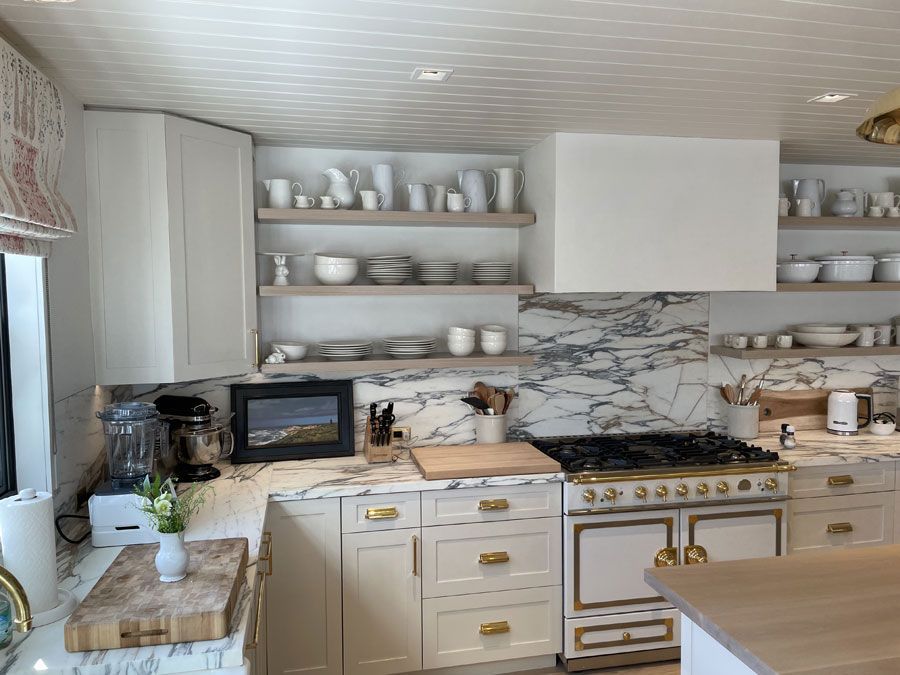
Layouts Designed for How Cooking Happens
Kitchen Remodeling in Southampton for outdated layouts, worn finishes, and insufficient storage or workspace
Kitchens fail when cabinet doors sag from deteriorated hinges, countertops show cracks or delamination from years of moisture exposure, and the layout forces unnecessary movement between cooking zones. BNJ Contracting remodels kitchens in Southampton, West Hampton, Hampton Bays, and surrounding areas by redesigning layouts that reduce wasted steps, installing cabinetry built to withstand coastal humidity, and upgrading fixtures that handle daily use without constant adjustment. The design process accounts for whether the home serves year-round residents who cook daily or seasonal occupants who prioritize durability during vacancy periods and easy maintenance during occupied months.
Kitchen remodeling involves removing existing cabinets, countertops, and fixtures, modifying plumbing and electrical systems to support new layouts, and installing finishes that combine functionality with durability. Decisions about cabinet depth, countertop overhang, appliance placement, and lighting positions affect how the kitchen operates once construction finishes. The process includes coordinating demolition, rough-in work for utilities, cabinet installation, countertop fabrication and mounting, fixture connection, and finish work in a sequence that prevents trades from damaging completed stages.
Request a design consultation to review your current kitchen layout and discuss remodeling options that improve both function and appearance.
What Changes After Kitchen Remodeling Completes
The remodeling process begins with evaluating existing conditions to determine whether structural modifications are needed, how utilities will be rerouted, and what preparation work the space requires before new cabinets and countertops are installed. This includes checking subfloor condition, confirming wall framing can support upper cabinet loads, and verifying that electrical capacity handles modern appliance demands. Skipping this evaluation leads to cabinets installed over unlevel floors, outlets positioned where they're blocked by appliances, and ventilation systems that exhaust inadequately because ductwork wasn't planned during the rough-in stage.
Once remodeling completes, cabinet doors align and close smoothly without adjusting, drawers extend fully and operate on soft-close mechanisms that prevent slamming, and countertops sit level without gaps where they meet walls or appliances. Lighting illuminates work surfaces directly rather than casting shadows from poorly positioned fixtures, and appliances fit within their designated spaces without protruding or leaving visible gaps. The layout positions the sink, stove, and refrigerator in locations that minimize walking distance during meal preparation, and storage places frequently used items within easy reach rather than requiring step stools or deep reaching.
Kitchen remodeling includes custom layouts designed around how the space will be used, selection of cabinetry and countertops suited for coastal environments, and coordination of all phases from demolition through final installation. The work optimizes space within the existing structure while upgrading finishes and improving functionality for daily living or seasonal use.
Common Questions About This Service
Kitchen remodeling decisions involve balancing design preferences with practical considerations about materials, layout, and budget. These questions address concerns homeowners in Southampton typically raise during planning.
What countertop materials perform best in coastal kitchens?
Quartz and granite resist moisture absorption better than laminate or tile, preventing issues with swelling, delamination, or grout deterioration from high humidity. Solid surface materials offer seamless installations that eliminate joints where moisture can penetrate, while natural stone requires periodic sealing to maintain stain resistance.
How does cabinet construction affect longevity in humid environments?
Plywood cabinet boxes resist moisture-related expansion and warping better than particleboard, while dovetail drawer construction maintains joint integrity under repeated use. Finishes formulated for high-humidity applications prevent peeling or bubbling that occurs when standard finishes are exposed to coastal moisture levels.
What layout changes improve kitchen functionality?
Reducing distance between the sink, stove, and refrigerator eliminates unnecessary steps during cooking, while adding landing zones near appliances provides space for setting down items during meal preparation. Relocating the sink to a window position improves natural light, and positioning the dishwasher adjacent to the sink simplifies plumbing connections and dish storage workflow.
When should kitchen remodeling be scheduled to minimize household disruption?
Scheduling during months when the home is unoccupied eliminates the need to set up temporary cooking arrangements, though year-round residents can minimize disruption by planning the timeline to complete demolition and rough-in work quickly before moving to cabinet installation and finishing stages.
How long does a typical kitchen remodel take from start to finish?
Duration depends on whether the project involves only cosmetic updates or includes structural modifications, plumbing relocation, and electrical upgrades. Simple cabinet and countertop replacements proceed faster than full remodels requiring wall removal, floor leveling, or utility rerouting.
BNJ Contracting designs and builds kitchen remodels that blend functionality with quality finishes, with experience optimizing layouts for both everyday use and seasonal occupancy. Schedule a consultation to discuss your kitchen's current limitations and explore remodeling solutions tailored to your needs.