
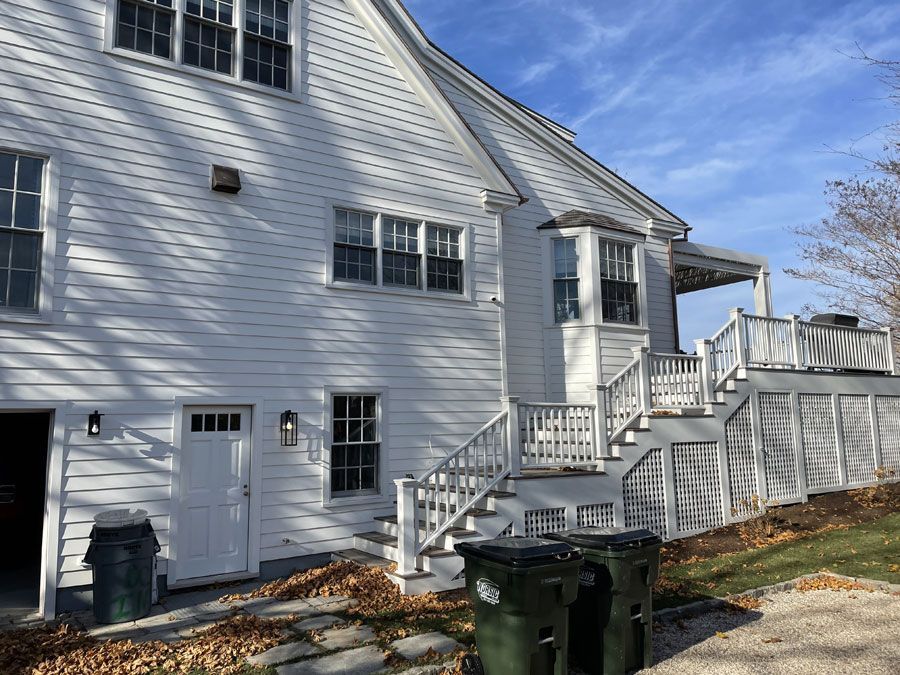
Protecting Homes From Salt and Wind
Siding in Southampton for properties requiring weather protection and improved exterior appearance
Siding fails visibly when paint peels in sheets, cracks open along board edges, or sections rot through at corners where water collects. BNJ Contracting installs, replaces, and repairs exterior siding on residential properties throughout Southampton, Amagansett, East Hampton, and surrounding areas, using materials and installation methods that handle coastal exposure without deteriorating within a few seasons. Homes showing these failure patterns need siding that sheds wind-driven rain, resists moisture infiltration behind the surface, and maintains its finish against salt air that accelerates corrosion and UV breakdown.
The process begins with removing damaged sections and inspecting sheathing for rot or structural weakness that must be addressed before new siding is applied. Moisture barriers are installed with overlapping seams and proper flashing around windows and doors to direct water outward rather than allowing it to wick behind the siding plane. Material options include fiber cement for dimensional stability, engineered wood for specific profile matching, and vinyl for low-maintenance applications where traditional appearance is not a priority.
Schedule a siding consultation to assess current exterior condition and review material options suited to your home's architecture.
How Siding Addresses Weather Exposure
Proper installation creates a ventilated drainage plane between the siding surface and the moisture barrier, allowing any water that penetrates through joints or fastener holes to drain downward and evaporate rather than saturating the sheathing. Corners are mitered or joined with trim pieces that seal edges, and butt joints are staggered across courses to prevent vertical water channels from forming. Fasteners penetrate into studs or blocking rather than relying solely on sheathing, preventing boards from pulling loose under wind load.
After installation, your home presents a uniform exterior finish without visible gaps, warping, or color variation between old and new sections. Siding no longer allows drafts through seams, and interior walls remain dry during storms that previously caused water staining. The material withstands seasonal temperature swings and humidity changes without cracking or delaminating, maintaining its protective function and curb appeal.
Fiber cement siding requires repainting every ten to fifteen years depending on exposure, while factory-finished options extend that interval significantly. Repair work often reveals underlying sheathing damage that must be corrected to prevent recurring failures, adding cost but ensuring the new siding has a sound substrate to anchor against.
Common Questions About This Service
Homeowners frequently ask about material durability, installation requirements, and how siding choices affect long-term maintenance and performance.
What causes siding to rot at the bottom edges even when the rest looks fine?
Ground splash and poor grading direct water against the lowest courses, and missing or damaged kickout flashing at roof edges concentrates runoff onto specific sections, saturating the material.
How does fiber cement perform compared to wood siding in coastal areas?
Fiber cement resists moisture absorption and insect damage better than wood, does not warp or split, and holds paint longer, though it weighs more and requires carbide blades for cutting.
Why do some homes develop mold behind siding shortly after installation?
Lack of a drainage plane or improperly lapped moisture barriers trap water against sheathing, creating conditions for mold growth that eventually stains through to the exterior surface.
When is partial siding replacement a better option than full re-siding?
If damage is isolated to specific walls and the remaining siding is structurally sound with availability of matching profiles, partial replacement avoids unnecessary cost while addressing the immediate problem.
What should I look for when evaluating siding quality on a completed project?
Consistent reveals between courses, tight corner joints, fasteners driven flush without overdriving, and caulk applied only where specified rather than over every seam indicate careful installation.
BNJ Contracting handles siding projects with attention to moisture management and material selection appropriate for coastal conditions. Arrange a property evaluation to identify specific areas requiring attention and discuss finish options that match your home's design.